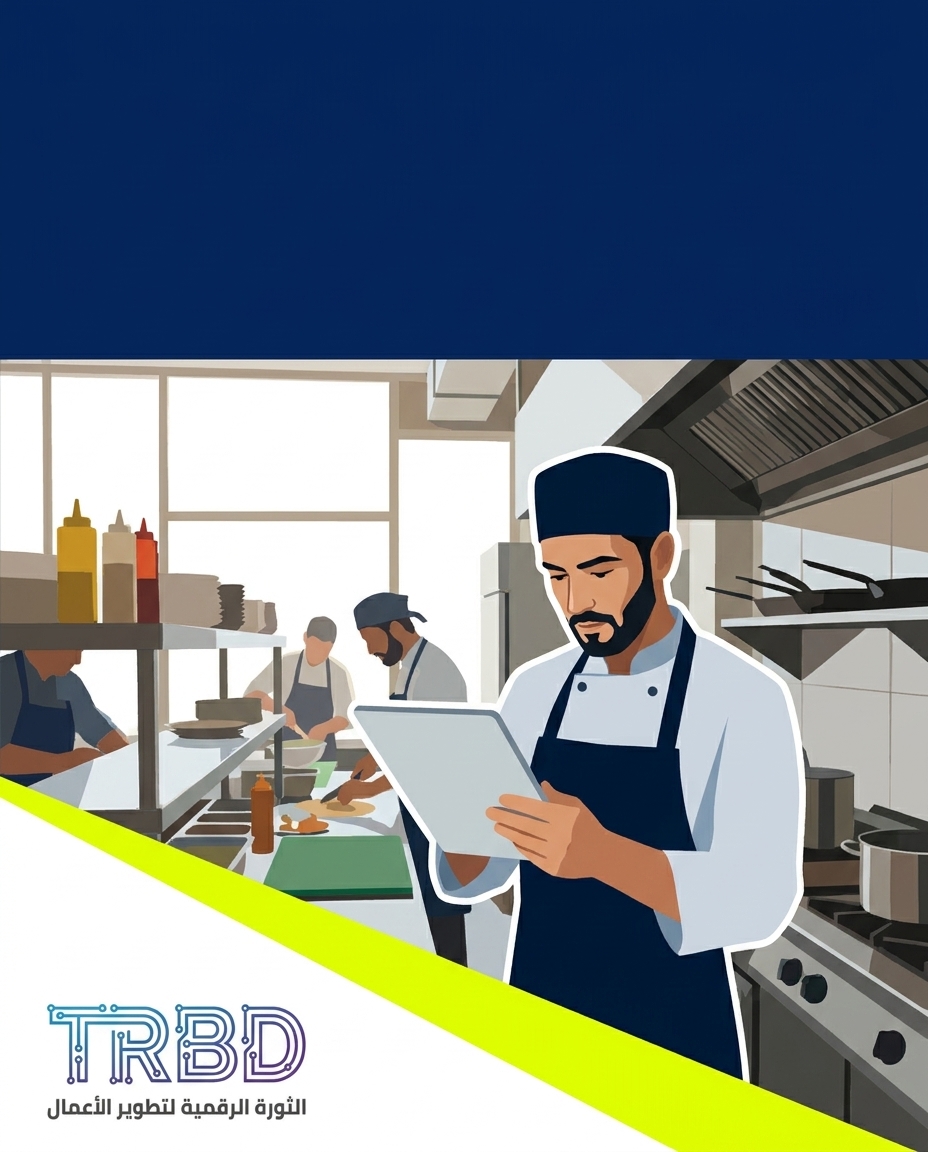
When the phone rings and the kitchen answers a WhatsApp order at the same moment, chaos starts. Auto-fetching supplier quotations Syria is not working, and each dish comes out with a different cost, delivery times slip without clear reason.
The operational problem
With orders scattered between phone and WhatsApp, and suppliers’ prices changing daily, the restaurant lives in a loop. The owner calls the supplier for today’s price of an item, notes it down in Excel or on paper, then an hour later receives a new quote, loses the first, and makes a late purchasing decision. About 7 in 10 business owners we know rely on a mix of Excel and WhatsApp to manage invoicing and procurement, meaning the kitchen is tied to outdated data. This disconnect between pricing and ordering creates gaps: the kitchen prepares a dish using an old price or rejects an order thinking stock is low, while the supplier actually has the goods.
Suppliers adjust prices according to market, and the restaurant has no unified channel for pulling and pricing materials. The result? Lost profit margin by using old prices and delayed customer orders. Closing month-end in a small or medium restaurant based on Excel can take 5–10 working days, whereas a unified system with pricing automation delivers it in under two days.
If the system integrates pricing automation, the kitchen sees a unified list with today’s prices and plans production accordingly. Without it, every meal feels like a separate project.
Why off-the-shelf solutions fall short
Standard POS or CRM systems often focus on sales, not linking kitchen to suppliers. Some integrate with sales platforms, but they miss:
- Regular updates of supplier prices without manual input.
- Filtering quotations by supplier quality or delivery speed.
- Unifying lists between phone, WhatsApp app, and website.
- Handling price differences in real time.
- Arabic-first user interfaces (UI).
TRBD's solution
TRBD’s Business Management Systems (ERP/CRM) integrate auto-fetching of quotations. We start with a discovery session: mapping how orders move from customer to kitchen, and pinpointing supplier disconnect.
Project steps:
- Gather current flow diagram and review supplier systems.
- Select API or supply channel for automated quotation fetching.
- Build a module tied to inventory showing the unified price list.
- Train staff to use the unified pricing screen.
- Run pilot, then full rollout.
Deliverables: daily updated price lists, direct link between order and pricing, and cutting month-end close to under 48 hours as seen with other clients.
How a client starts with us
Contact us at info@trbd.net or via WhatsApp Turkey https://wa.me/905537323153 or WhatsApp Syria https://wa.me/963992367582 for a free initial assessment. We review your current setup and suggest a practical path.
Toward a new operational model for Damascus restaurants
Restaurants in Damascus face a clear gap between kitchen and material market. Dependency on Excel sheets and individual calls has become costly in time and money. Automation—especially auto-fetching supplier quotations—changes the game: it provides live data, reduces errors, and ensures orders are delivered on time.
We expect restaurants that integrate supplier systems will lead the market, just as those using custom management platforms cut month-end from 5–10 days to under two days. Meanwhile, clinging to limited off-the-shelf tools will cause slowdowns and confusion directly affecting customer experience.
The next move in Damascus’ food sector will be toward unified platforms linking kitchen, suppliers, sales, and inventory. This reflects a matured sector that understands speed is not a luxury but a survival requirement.