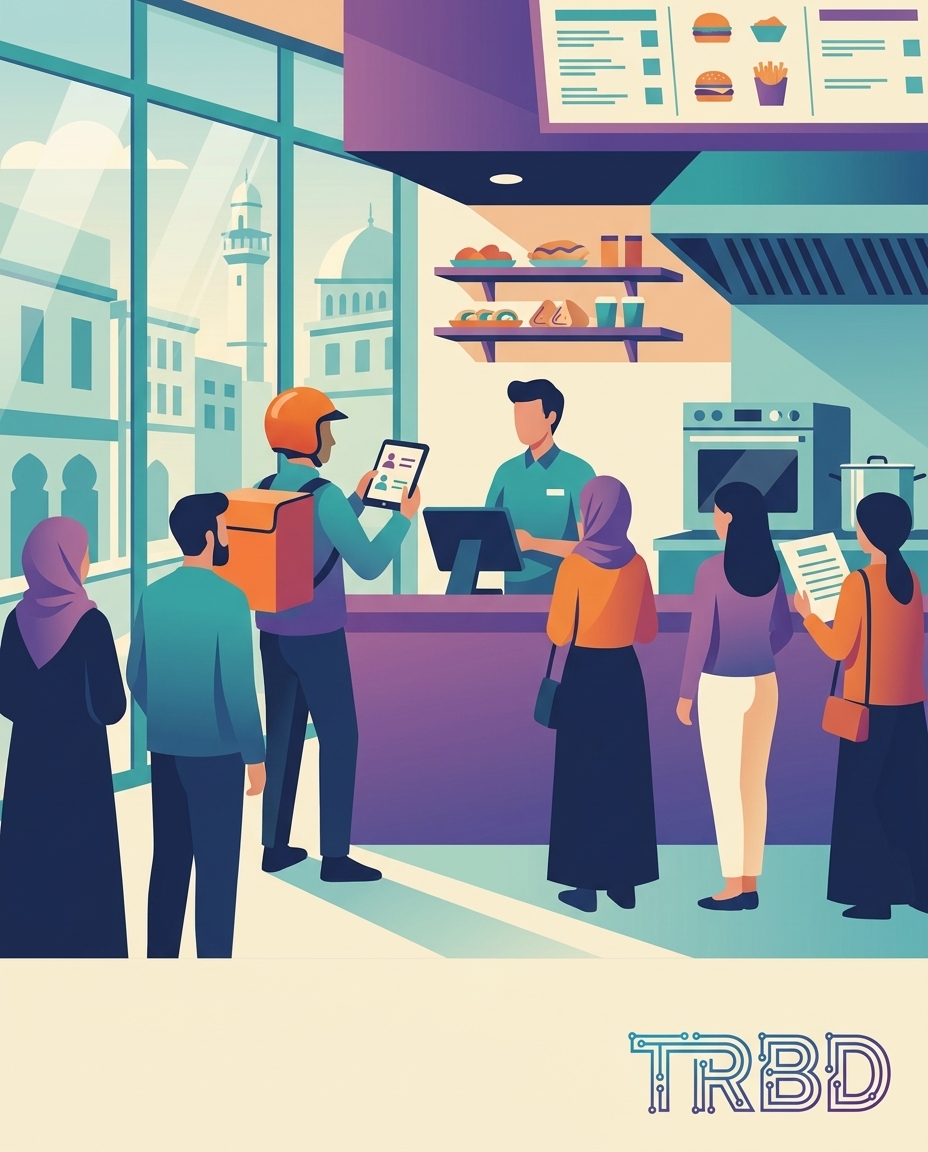
The first call came mid-afternoon, the restaurant owner sounded tense: "Since 10 AM we've been missing delivery orders from WhatsApp." The Syrian driver and delivery app appeared in the first ten words.
Situation
A medium-sized restaurant in Damascus, with about 15 people including cooks, drivers, and order staff.
They rely on the WhatsApp app to chat with customers and record each order in a growing Excel sheet. Among dozens of messages, orders get lost or logged in the wrong column. Customers call multiple times asking "Where is my order?", some cancel after an hour's wait.
Delivery runs depend on manually calling drivers, giving addresses over the phone, or rewriting the order on paper. Every hour, two to three orders get delayed because kitchen prep times don't match driver arrival.
Manually compiling this data at month-end used to take 5–10 working days, based on our past client data. For this restaurant, it sometimes stretched to two weeks when orders piled up.
Action
We started with a detailed discovery session. We mapped the order flow from the first customer message, to kitchen dispatch, to driver departure. We found seven weak points: no central log, lost orders within Excel tabs, and delays from driver phone calls.
We implemented a custom mix of our "Mobile apps" and "Business management systems" with a delivery unit. The system connects WhatsApp via API integration to a single dashboard: every order enters directly, links to kitchen stock, and assigns the available driver.
We created a driver app on Android using Flutter, with an "Accept order" button and a "Delivered" button, plus Directions map. Every action is auto-recorded.
The build took about one to one and a half months from the first session to the first live version. After two weeks of testing, we added customer notifications: an automatic message when the order leaves.
Result
The improvement was clear after the first two months:
| Metric | Before | After |
|---|---|---|
| Month-end closing time | 10 working days | Under 48 hours |
| Lost monthly orders | approx. 12 | zero |
| Daily delay complaints | 5–7 | 1–2 |
| Monthly revenue | stable | approx. +15% |
The only change was that the order appears to both driver and kitchen at the same moment.
Complaints dropped, drivers knew their schedule without waiting for calls.
Lessons Learned
- Direct linking between chat platform and kitchen minimizes errors.
- Syrian driver and delivery app shortens coordination time.
- Central dashboard gives live data instead of delayed Excel summaries.
- Pre-emptive customer notifications reduce call volume.
- Training drivers on the Arabic-first interface took less than four hours.
FAQ
Can the system connect to kitchen inventory?
Yes, linking allows deducting ingredients immediately when an order is logged.
What about phone orders?
Staff enters them manually into the system to unify the record.
Pros/Cons
✅ Reduce lost orders.
✅ Faster monthly accounting.
✅ Boost revenue.
❌ Needs staff commitment to log each step.
Got a similar case?
If the story above matches your reality, message us on WhatsApp https://wa.me/905537323153 for a free, no-commitment assessment session. It might show you where your orders vanish before you even notice.