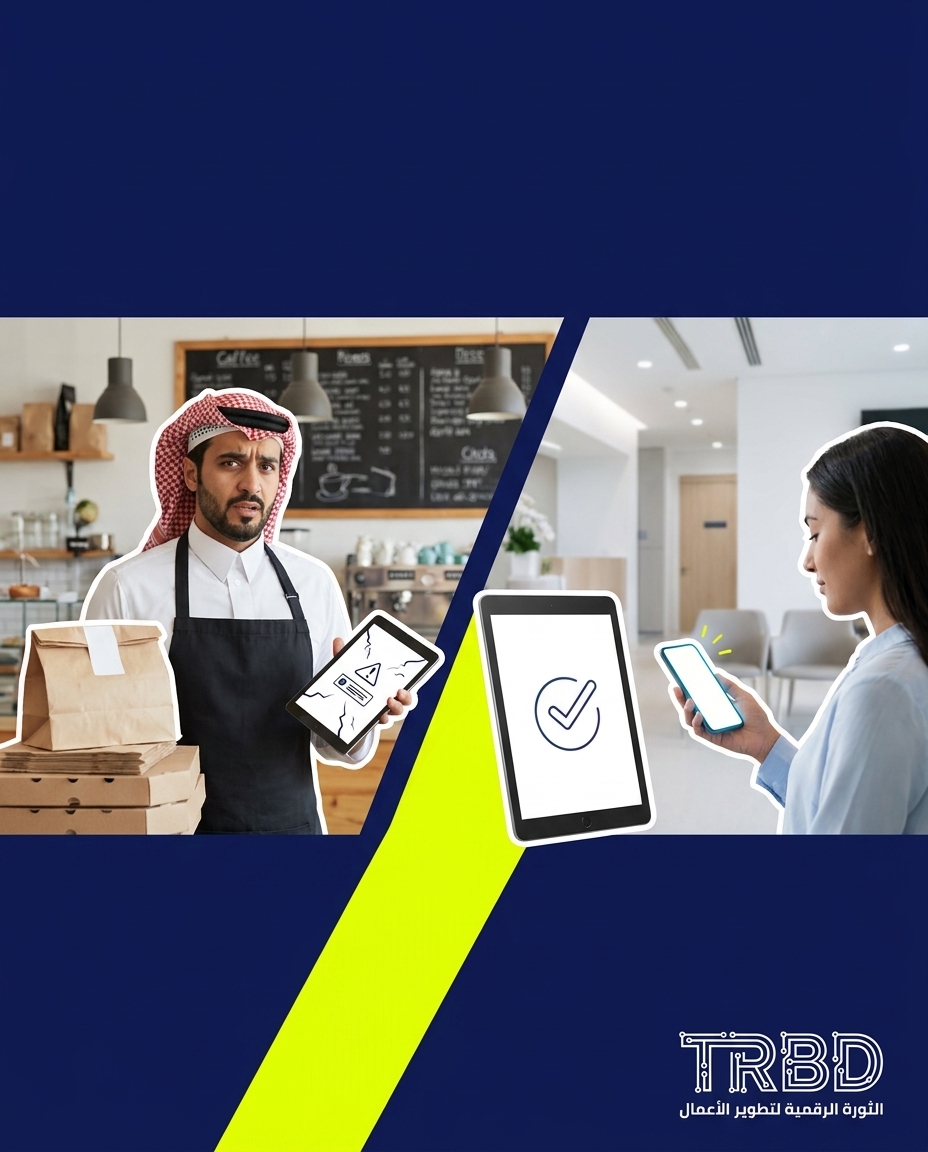
The problem isn't a missed call — it's that the order never made it to the kitchen in the first place. Even a clinic appointment reminder system Syria can inspire a way to organize the flow.
Most delivery restaurants live on three sources: a delivery app, a landline phone, and WhatsApp chat. Orders come from any of them, but the kitchen sees only what the cashier writes on paper. Any order not written down is lost.
The Operational Problem
In a mid-sized Damascus restaurant, the delivery manager knows any lost order is not just a number, but a customer who might not return. Prep teams wait a few minutes, then keep working thinking everything is covered. The result: an order goes out late or doesn't go out at all. The cost of these mistakes goes beyond price — it's about reputation.
Orders flow in parallel from three channels, and there is no unified kitchen screen listing all new orders as soon as they hit the system. This means the cook relies on the cashier to hand over a slip, and the cashier relies on memory to turn chat into tickets.
About 7 of 10 business owners we know run their operations on a mix of Excel and WhatsApp, meaning kitchen dispatch is not automatic. Closing the month in a restaurant using only Excel can take an entire day just to compile orders before making reports.
Orders from delivery apps often come in a separate interface from the internal POS system. Linking the two doesn't happen automatically unless a custom integration is built. This gap means an order is recorded in one app but never reaches the cook's screen.
After installing a unified system, and according to TRBD support logs, new tickets drop from 20 in the first month to 3 once stable. This shows operational errors in order transfer drop sharply.
Why Off-the-Shelf Tools Fall Short
POS systems or canned platforms try to link sources but often fail in these cases:
- They don't support all order intake channels (phone, multiple delivery apps, WhatsApp).
- They rely on manual entry for all orders, opening room for mistakes.
- Orders don't appear in the kitchen the moment they are received.
- They don't provide notifications to cooks when a new order hits.
A ready-made tool may give you one interface, but it doesn't know your restaurant's specific flow. Kitchen UI changes are often limited and not customizable.
The TRBD Fix
At TRBD, we start by mapping every order channel the client has, then build a custom integration using services like Web Platform Development or Mobile App Development where needed.
Project steps:
- Discovery session to map actual restaurant order flow.
- Design kitchen screen UI to show all orders immediately.
- Develop API integrations with each order source.
- Deploy the system on kitchen and cashier devices.
- Train staff on use.
Scope includes UX/UI design, full-stack development, and post-launch maintenance. Outputs: unified kitchen screen, synced order list with cashier, instant notifications upon order arrival.
In past projects, adding a kitchen screen module on an active system took only two weeks because the data model was ready.
How to Start with Us
Contact us via email at info@trbd.net or via WhatsApp Turkey https://wa.me/905537323153 or WhatsApp Syria https://wa.me/963992367582 for a free initial assessment.
Toward a New Operating Model for Damascus Restaurants
Damascus restaurants face a shift: orders no longer come from a single phone customer, but from multiple channels — all needing rapid entry into the kitchen. Those adopting a unified kitchen screen cut transfer time between cashier and cook, preserving reputation.
Practical note: as with the clinic appointment reminder system Syria, the right message at the right time changes everything. In a restaurant, that message is the order appearing instantly on the cook's screen. Linking all sources and turning them into a single ticket in one interface reduces operational mistakes and boosts productivity.
With about 6 of 10 TRBD clients convinced after the first session they need a custom system, Damascus restaurants have a big chance to benefit from the same expertise. Recommendation: don't wait for the customer to complain; make sure the system never lets an order slip.