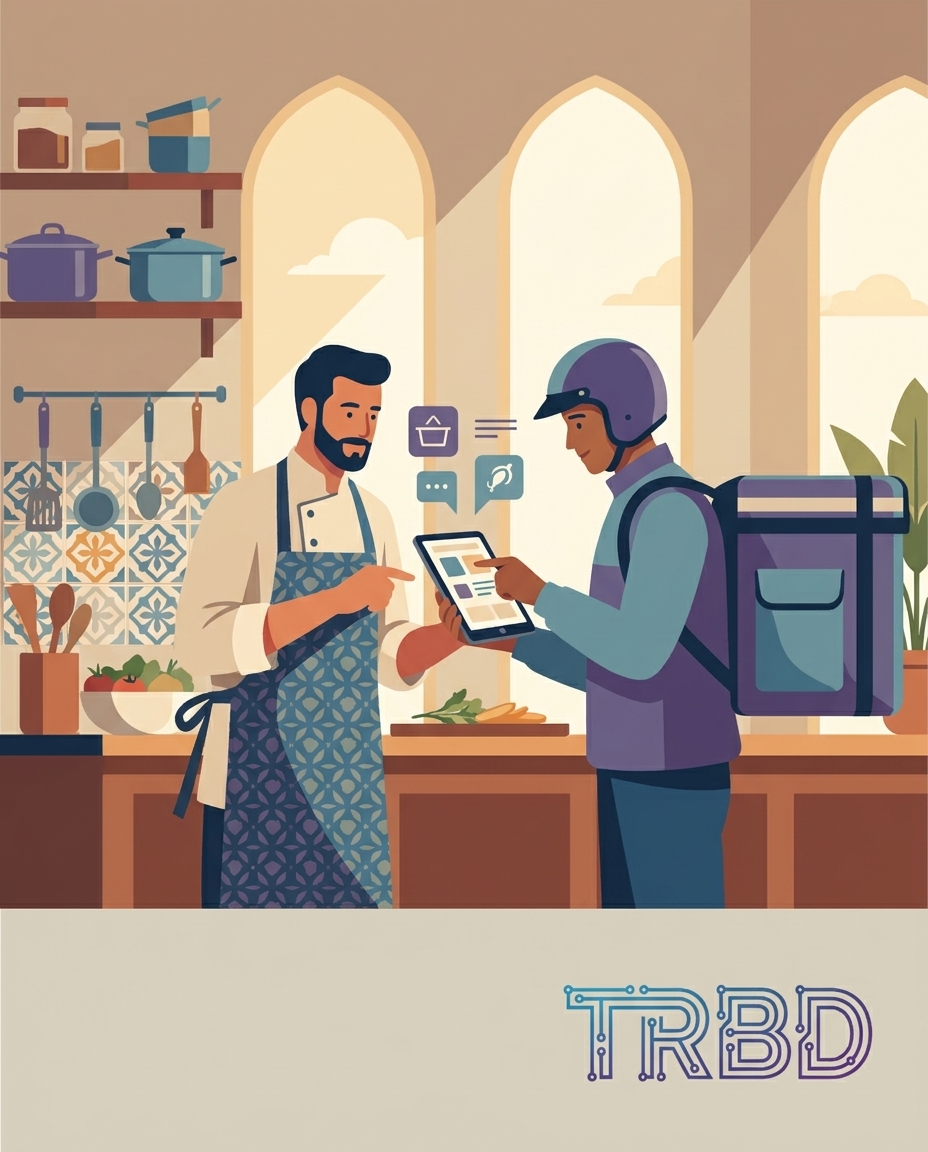
About 7 in 10 restaurant owners we know in Damascus still write delivery orders on small paper slips and place them on a shelf near the kitchen. The slip might fall, get wet, or be handed by mistake to a driver headed to another address. Result: the customer waits an hour, then calls back upset.
The operational problem
A small restaurant processes dozens of orders daily. Each order travels from cashier to kitchen to driver. Any lost or incomplete slip means lost sale, re-cooking, and extra delivery cost. When the kitchen receives an incomplete order, staff start calling or messaging for details, taking time from the production line. More than that, the Excel sheets or paper notebooks the owner tries to link stock to sales don’t give a clear picture.
Numbers-wise, month-end closing for a restaurant using Excel takes 5–10 working days. This time accumulates with every daily delay and slows down decisions about menu and purchases.
Suppliers are affected too: if the vegetable or meat invoice isn’t logged immediately, there may be over- or under-ordering, causing shortages or unsellable surplus.
The final outcome of paper flow: erratic customer service, and lost chance for repeat orders due to a bad experience.
Why off-the-shelf tools fall short
POS systems or quick order apps are often designed for Western environments or big chains.
- No full link between kitchen and driver with Arabic-first interface.
- Limited report panels, no daily stock detail.
- Local payment integration is missing or weak.
- Can’t gradually integrate current paper orders.
- Support is distant and unavailable during restaurant operating hours.
TRBD’s fix
Our Business Management Systems (ERP/CRM) service lets us build a custom restaurant system linking invoice to stock and delivery timing.
Project steps:
- Exploratory session to map the order path from cashier to kitchen to driver.
- Design Arabic-first user interface showing orders upon arrival.
- Develop covering stock, invoices, and address link for each order.
- Integrate with daily report panel.
- Train staff — onboarding drops to under 4 hours.
Expected outcomes:
- Paper loss problem gone.
- Month closure in under 48 hours instead of 5–10 days.
- Support tickets stabilize at 2–4 per month.
How to start with us
Contact info@trbd.net or WhatsApp Turkey https://wa.me/905537323153 or WhatsApp Syria https://wa.me/963992367582. We run a free first evaluation of order and stock flow.
Towards a new operational model for Damascus restaurants
When kitchen orders, stock, and invoices link automatically, there’s no need for paper. The local market is moving toward partial automation even in the smallest restaurants, because competition for the customer now depends on execution speed and order accuracy.
Our experience with Syrian restaurants shows that adopting Syrian accounting and inventory software tailored to the operation cuts waste and improves satisfaction. Within a month to month and a half from launch, the system is live and the restaurant can handle higher demand without stress. Competition will intensify, and those not improving their flow will simply lose market share.
If today paper loses your order before it arrives, tomorrow the market might lose you as a competitor.