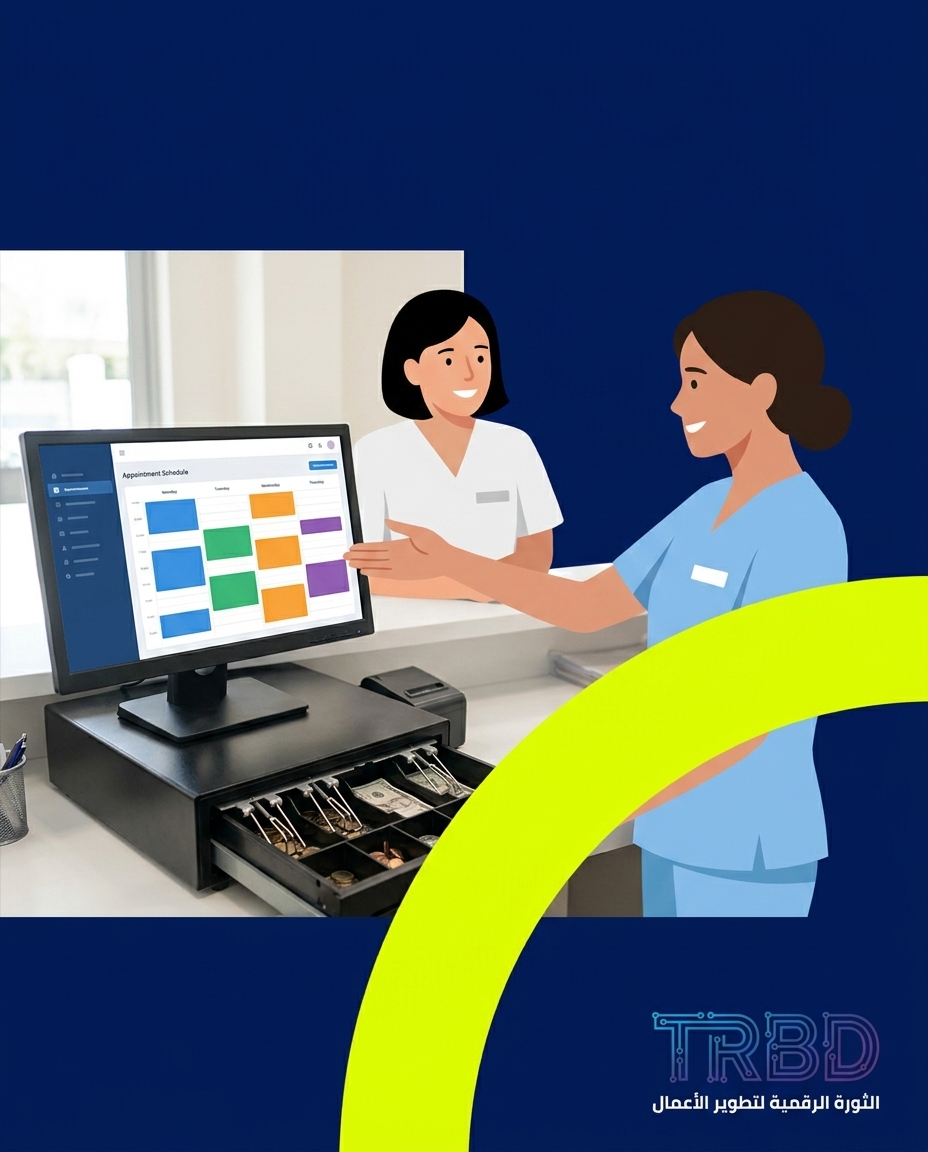
Automation of payment and receipt vouchers isn’t a luxury for a clinic drowning in calls and WhatsApp threads. People think the problem is “busy lines,” but the real issue is an invisible queue where appointments aren’t tied to a clear financial record or measurable follow-up. Once vouchers move in lockstep with bookings, call volume drops naturally because requests flow on rails.
The full checklist
- Unify the booking channel: a simple web form auto-shared in WhatsApp auto-replies and the voice greeting. It lowers chaos and routes every contact into one flow.
- Status for every request: each booking request gets a clear state like “awaiting confirmation,” “confirmed,” “canceled,” “no-show.” One color per state and a single “Update status” button keeps it honest.
- Tie appointments to a unique patient record: one patient ID links every call, message, and invoice to the same file. Without this, names duplicate and follow-ups slip.
- Enforce time capacity: define per-hour capacity and chairs/doctors, and the system rejects bookings that exceed it. A “Suggest next slot” button reduces back-and-forth.
- Auto-confirmation policy: a short confirmation text with a “Confirm attendance” link goes out 24 hours before. If no click, the record turns “at-risk” and can be offered to others.
- Smart waitlist: any freed slot is pushed to the top three on the waitlist via “Slot available.” First to confirm gets the seat.
- Link each booking to a voucher: generate a draft payment/receipt voucher at booking confirmation with a unique number and source “Appointment #…”. On arrival, one “Approve voucher” click turns it official.
- Deposits for long procedures: an optional deposit creates a receipt voucher tied to the appointment. Late cancellations trigger a reasoned payment voucher per policy.
- Filtered communication channels: WhatsApp chats land in “incomplete requests” until they end as a booking or a rejection. An “Escalate to call” button appears only when needed.
- Color-coded front-desk board: a daily board with “confirmed,” “waitlist,” “at-risk,” “no-show.” Colors set call priority instead of guesswork.
- Short operational reports: a morning digest with “today’s capacity,” “confirmed bookings,” “expiring confirmations,” and “draft vouchers.” Each item asks for one clear action.
- Daily cash close: end-of-day comparison between executed appointments and approved vouchers. Gaps appear as an “Appointment without voucher” alert.
- Arabic-first UI guidelines: labels and messages in Arabic first with English in parentheses, which cuts new non-technical staff onboarding to under 4 hours in our observed projects.
- Granular permissions: the front desk edits bookings but can’t approve vouchers; the accountant does the reverse. A “Request approval” button connects the teams without waiting.
- No-show playbooks: “first no-show/repeat” with rules. First gets a free reschedule; repeat requires a deposit. This becomes a clear log, not a mood.
- Ready-made reply templates: pre-set snippets for confirmation, reminders, directions, and delay policy. Consistent tone, saved minutes.
- Doctor calendar blocks: no booking over long procedures. One “Block time” action reserves cleanup and extended treatments.
- Weekly numbers huddle: 15 minutes on “contact-to-booking conversion,” “no-show rate,” and “draft vouchers.” Decide one adjustment for the coming week.
With Arabic-first UI, onboarding a new non-technical staff member drops to under 4 hours — a real-world saving we see repeatedly.
Decision table
If the checklist felt “doable,” the next question is timing and tolerance for an initial ramp. From our delivery logs, first production releases for flows like this typically land between a month and six weeks, especially when you want strict linkage between bookings and payment/receipt vouchers. Multi-department integrations usually take two to three months.
Context matters: most mid-sized operators we meet run 3–5 disconnected tools (WhatsApp, Excel, an old accounting app, a paper ledger, sometimes a POS). Moving to a single flow means higher friction and more support tickets in month one (roughly 15–25), then stabilizing to a small monthly count (about 2–4) after the first two months.
| When it fits | When it doesn’t fit |
|---|---|
| You have a steady front-desk team and can commit to four weeks of process change. | Your team changes daily and you can’t spare even a one-hour weekly session. |
| You accept a spike in questions and support in month one before stabilization. | You expect absolute calm from day one and can’t handle minor adjustments. |
| You can wait a month to six weeks for the first production release and invest in brief training. | You need a fully complete system “tomorrow” with no early operations phase. |
| Your accountant can approve vouchers daily and perform end-of-day cash close. | Accounting is outsourced and refuses any daily approval or system touch. |
| You’re willing to try a small deposit to curb repeat no-shows. | You reject any deposit or clear patient policy even if losses continue. |
What to do next — linking appointments with automation of payment and receipt vouchers
If you score 7 or more ready items, start a “soft run”: pick two low-pressure days and switch to the unified form with auto-confirmation. Turn on draft voucher generation at confirmation, and have accounting approve at arrival. After a week, enable the smart waitlist and test deposits for long procedures.
If you’re under 7, build it stepwise. Start with “status per request,” even in a temporary Excel: state/name/phone/slot/doctor/notes. Two days later, add a short confirmation text sent automatically. Then enable reply templates. The idea is to move from “call/message” to a measurable “request with a state.”
Avoid “automate everything” on day one. The sequence we see work best: unify the channel, add clear states, enable auto-confirmation, turn on the waitlist, then tie vouchers. After that, move to reporting and daily cash close. This order reduces friction and creates quick wins that earn team trust.
How TRBD helps
We’re a Damascus-based engineering studio that builds working operational systems with Arab business owners. For this scenario, we deliver a web platform to run booking flow, an Arabic-first front-desk UI that cuts new-hire training to under 4 hours, and we integrate with your ERP/CRM and a WhatsApp chatbot under our “AI and operations automation” service line. We generate draft vouchers at confirmation and approve them on arrival, with a short, actionable reporting layer.
Typical launch for this class of project is a month to six weeks for the first production release. If you need multiple integrations, we stage them next and they usually take two to three months. Expect 15–25 support tickets in month one as the team hits rare cases, then a stable trickle (2–4 per month). When every appointment is tied to a voucher, daily cash close becomes routine instead of a firefight.
Need a second set of eyes on your checklist?
If you’re missing more than two items, let’s do a quick 20‑minute call and map the next two weeks. Send the word “Clinic” via WhatsApp at https://wa.me/905537323153 and mention the single most frequent snag you face today.